Recent Posts
What is Machine Learning and Deep Learning?
One of the most notable films of 2021 and perhaps the last 2.5 years of the pandemic, the Matrix 4 met with the audience at the end of December. It is one of the most important examples of the “struggle” between humans and machines in the history of cinema, but it is not the only one. The efforts of intelligent machines, including Terminator, created by humans, to destruct humanity on their own have been a subject that has not aged for decades.
Although Hollywood has focused on the dark side of the machine and human relationship in movies that have been watched billions of times when Alan Turing developed the machine that decoded the Enigma in World War II and prevented nearly a million people from dying, peace was at the heart of the machine and human relationship.
What is Omnichannel Retail? Transforming Traditional Sales Approach
Thanks to increased smartphones and social media penetration, a data-driven transformation has become possible in the retail sector for the last decade. Recent research shows that more than 75% of retail customers shop from multiple retail channels. As expected, digital channels are coming to the fore with the effect of the pandemic.
With the effect of this, retail companies have increased their focus on digital channels and increased digital advertisements. With a similar transformation on the customer side, nearly 80% of customers search for products on mobile devices.
Today, the terms omnichannel and multichannel are often confused. So, first of all, let's start with the answer to the question: what is omnichannel retailing.
How to Apply Digital Transformation Strategies To Your Business?
If we analyze Google trends, there is almost no search data for "what is digital transformation" until 2014. However, the "popularity" of the concept, which started to rise afterward, seems to have reached the highest level, especially after 2019.
Of course, our aim is not to evaluate the importance of digital transformation according to its popularity in Google searches. Since the beginning of the 2000s, companies have been working to position the transformation strategically. Although the concept is unique, we observe extensive application practices.
Telco priorities in tech investment post-pandemic
The pandemic affected the telco industry just like all the industries and accelerated the plans for the adoption of digital technologies.
Watch Mark Newman, TM Forum’s Chief Analyst, and Etiya’s Chief Commercial Officer Apostolos Kallis as they discuss the impact of the pandemic, key challenges faced, and telco priorities for investment in future technologies.
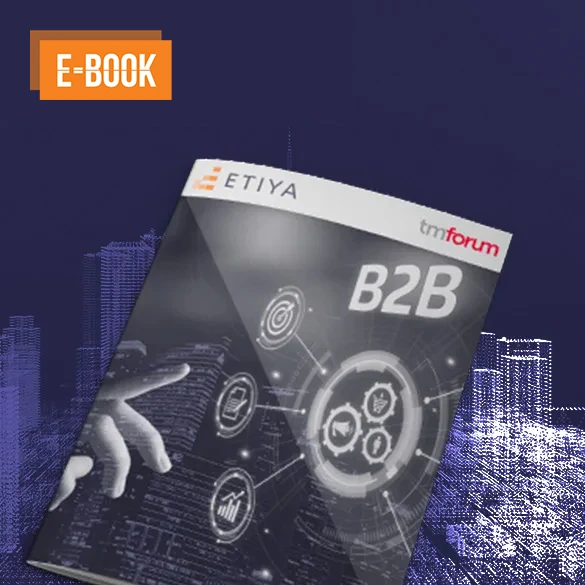
E-book: a new approach to B2B customer segmentation
The inflexibility of legacy customer segmentation is holding communications service providers (CSPs) back as they seek to evolve and expand their B2B operations. To maximize their commercial opportunities, they need to find smarter ways to segment their market that address the evolving needs of their customers, taking into account key trends such as hybridization, consumerization and verticalization, as well as new channel strategies and B2B2X models.
The Endless Race in E-commerce: Customer Experience
Today, the retail industry is changing rapidly and dramatically. Global economic fluctuations could limit growth in this sector, which accounts for roughly 30% of the worldwide economy and is worth more than $25 trillion globally. However, new business models, changing customer behavior, and technological advances have triggered a significant shift to e-commerce, creating a wide variety of new market opportunities.